
8th ATHICFF: Jaroslava Hynstova: “For me cinema is about living different lives!”
Jaroslava from Czech Republic, comes from a country with rich tradition in art and films. As a programmer in Zlin Festival, the oldest in Europe, has a lot to share about the mission of festival, animation films in general and what kids find interesting nowadays!
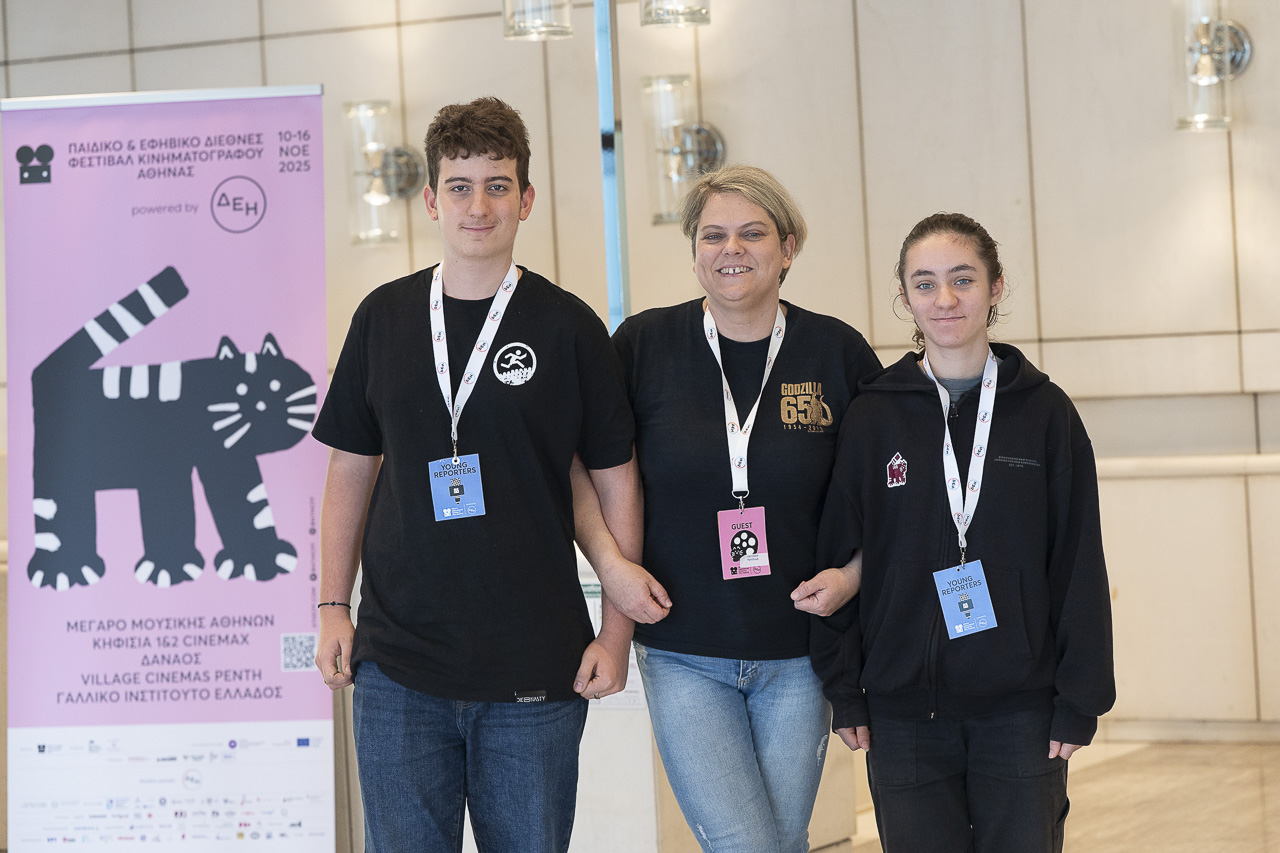
Interview by Young Reporters* (Lefteris Kalandranis, Sofia Randavella)
Bio
Jaroslava Hynstova has been working as a film programmer in Zlin Film Festival- International Film Festival for Children and Youth since 2005. She studied Film and English Philology at the Palacky University in Olomouc. She is a screenwriter and director of an amateur theatre group in her hometown and she was a regional correspondent for the biggest Czech newspaper. She has participated in juries all around the world.
-You are in charge of the oldest and biggest film festival for children in Europe. What keeps you motivated each year?
I’ve been doing this job for 20 years! And I love my job because I studied film and English, so my work is actually my hobby! I think it’s a big privilege to work for children’s film festivals because sometimes I think that children’s films are overlooked. So, I hope that I give children’s films the opportunity to be seen by children and to help build the reputation they deserve.
-Why do you think children’s films are not regarded as important?
Because people don’t care, they are not interested. For example, in my country in the Czech Republic, when we ask someone from the capital “why don’t you come to our festival?” the answer is “hmm but it’s a children’s film festival. There are only fairytales and costumes…”. They are not interested, because they don’t know what is it about. But I think that is changing.
There are so many children’s film festivals all around the word, like yours. It is a huge opportunity to watch those films because, otherwise, you cannot see the films anywhere else, since these films are usually not included in mainstream distribution. So actually, it’s a big honor to work for such a project for children!
And there’s one more thing: many people don’t realize that actually, children’s film festivals raise future audiences. We teach them! These children are a future audience for Cannes, for Venice, for Berlin! Your festival also has cinema for babies! I’d love to have it in our Festival as well! I love it! We should work step-by-step!
-What would you say is the main aim of your festival, Zlin? What makes it different from other children’s festivals?
Oh, I can talk about that for hours! Well, we are the biggest and oldest festival in the world, not only in Europe. We have 300 films, 200 features, 100 short films and 100,000 visitors during that week! Sometimes I call it a “monster”! But, still, Zlin is a small town with 70,000 people, so people cannot really miss it, like in big towns or capitals. Wherever you go, you see some kind of event connected to the festival. And even though it is a big festival, we try our best to keep it familiar-like. We also have many guests, but we try to meet them every night or during the screenings, talk with them. Festivals, in general, are about connecting people, they are a big networking nest.
I could add one more thing. Our festival comes from tradition. We’re going to be 66 years old next year! People in the region have visited the festival at least once in their lifetime. They used to go to the festival as children with their school, so everybody has memories from the Zlin festival!
Also there used to be a film studio in Zlin, films were made here. It started in the 30’ s when the studio was built, and during the 60’ s, the 70’ s and the 80’ s, it used to be the center of children’s film making. Actually, they started the festival in 1961 as to show what they were making in that studio. Now on what makes our festival different. I would say we are all the same. We all have the same aim, to show children the best possible films, to show them something that they cannot find in cinemas or on TV or YouTube.
-Is the studio still there?
It’s still there but now it’s coming back to film production. After the fall of communism, everything was free, we were free, but there were some negative sides. For example, the films during communism were funded by the state, so back then we had at least five children’s films a year, but after the revolution the production stopped. Everything was privatized and there was no money.
-So Zlin is not just about the festival, it is also a historical site of children’s filmmaking!
Yes, that’s true!
-How many Czech films are made per year?
The state television produces a lot of fairytales which are a different genre, a complicated one, more understandable to Czech people. Foreign people don’t usually like them, but nowadays, we’re very strong at feature animations. Did you see “Living Large” this year? It is characteristic, these Czech puppets. We are very strong with feature animation and classical animation, not 3D, not anime, just puppets.
-So, have the Czechs pioneered in this type of animation?
In Czechoslovakia and specifically in Zlin film studios, in the 40’ s -like 80 years ago- there was the first puppet animation, so the tradition in animation is very strong here and very old, and now we’re kind of coming back with these films. We pay tribute to this classic animation.
– A small question: the Czech Republic has always had a strong tradition in the arts. How are things today, especially in cinema?
We have a brand-new animated film this year. It’s called “Tales from the Magic Garden.” And it’s done with puppets as well. It premiered at the Berlinale, the well-known and highly prestigious Berlin festival. We have this film and many other Czech productions; we have fantasy… it’s going very well, it keeps getting better and better, and I hope that next year we’ll be just as good—or even better!
-What kind of movies do you think kids enjoy watching nowadays?
I think they’re interested in the same stories as always. They usually laugh with sports-related stories. For example, the Czech Republic is well known for ice hockey and football. Dancing and social media are also very popular themes among children. The thing is we cannot stay in the past, we have to follow what interests the children, we have to go with the flow! Personally, I really enjoy films about outsiders.
-Children are often obsessed with screens in general – social media, YouTube, video games. They tend to be impatient and distracted to the extent that they cannot watch a whole movie.
I think children can be restless, but they are always the sincerest audience, they tell the truth if they don’t like something, they let us know. It is a sign if kids become restless. But then, when children come to the cinema with their school, they may act like that just because they are in front of others, and not because they are genuinely not interested.
It is simple, filmmakers should make interesting films. One other important factor is to do the categorization properly because, for example, if a movie is marked 6+, it is not age-appropriate for older kids, it will seem childish to them. Most of the time, we do it correctly, but sometimes teachers intervene.
-What is cinema to you?
It’s a passion and a mission, as a job. For me, personally, cinema is about living different lives! I watch a nice story taking place, let’s say, in Asia and I’m there! That’s why we need the big screen, to share the experience with others. I’m an old-fashioned cinema lover and I love the big screen! And I think it’s very important also for the festivals to bring you to the cinema, to make you get rid of the small screens for a while and see a film on the big screen. It’s a totally different experience.
*Young Reporters is the journalistic team of our Festival, composed of young people aged 14-17 years old. The Young Reporters document what happens at the festival, interview creators, performers and professionals in the field, as well as the audience! They also do reporting, write film reviews, everything! Join our team.