
8th ATHICFF – Mehdi Avaz: “When you commit to telling a story genuinely through the eyes of children, you rediscover the world alongside them”
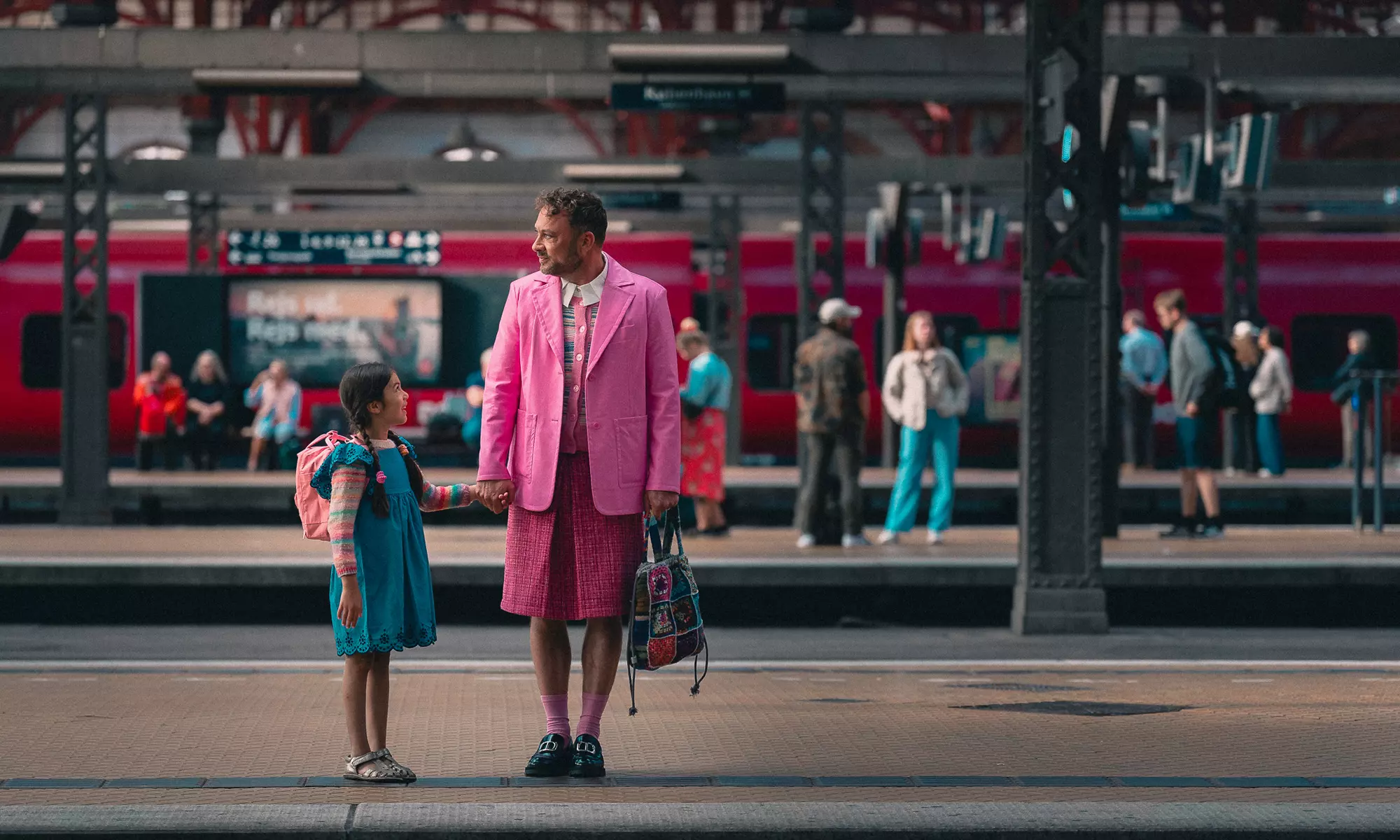
The film The Children of Silver Street from Denmark really captivated us all this year, both children and adults alike. Our Young Reporters spoke with its director, Mehdi Avaz.
-After the great success of “Toscana” and “Beautiful life” (aired on Netflix) your next step was this incredible family movie. How did you decide to make a film for young audience and families?
I wanted to create something I could be proud to share not only with my own kids, but hopefully something they one day might share with their children and grandchildren. For me, it was important not to underestimate young audiences — children deserve stories told with care, depth, and high artistic quality.
This project felt like the right opportunity to challenge myself creatively and to create a movie that leaves audiences with warmth, joy, and a shared experience.
-It was really captivating and liberating to see this story being narrated from the point of view of children. The camera seems to show the world through their eyes. How did you work as to reach this goal?
Thank you, that was exactly what we hoped to achieve. From the beginning, it was important to me that the film truly felt like it was experienced through the children’s eyes. To reach that goal, we worked very closely with the young actors, not only during rehearsals, but in creating an atmosphere on set where they felt free, safe, and playful. I wanted their natural curiosity, spontaneity, and humor to guide the tone of the story.
Visually, we designed the camera work to stay close to their perspective, both physically and emotionally. That meant shooting at their eye level, being patient with their rhythms, and allowing the world around them to feel big, strange, magical, and sometimes overwhelming, just as it often does for children. I truly believe that when you commit to telling the story honestly from their point of view, you rediscover the world with them and that sense of wonder is something I hope the audience can feel.
-What was important to you personally to highlight in the story?
For me, the most important theme to highlight in the story is the idea that family is not defined only by blood. What truly matters is love, safety, and belonging.
I wanted to show that it’s completely okay if your family doesn’t fit into a traditional structure. Families today can look many different ways, and what makes them real is the care and support we give one another.
This story is about finding your own family, the people who love you, protect you, and allow you to grow. I believe that message can be incredibly comforting, especially for children who may not have a “perfect” or conventional home. It’s a reminder that you can build your own future surrounded by people who choose you, and whom you choose in return.
-In the film the social services and the headmaster of the school are the villains. Is it a comment that the system is wrong or was it a necessity for the narrative?
It was never our intention to make a statement that “the system” is bad. The social services and the headmaster serve primarily as narrative forces, obstacles that highlight the children’s perspective and emotional journey.
From a storytelling point of view, the adults in power represent something larger and more difficult for the children to navigate. When you’re a child, systems and authorities can feel overwhelming, even when they are trying to help. We wanted to capture that feeling honestly.
In reality, these institutions exist to protect children, and many people working within them do their best every day. But in the film, we needed to show how easily children can feel misunderstood or unseen when decisions about their lives are made without their voices.
So rather than a critique of the system itself, it’s more an emotional reflection of how children perceive the world, and how even well-intentioned authority can feel threatening when you’re young and vulnerable.
-What would you say that were the qualities of Miss Nelly that won over the children when interviewing him?
What won the children over was Miss Nelly’s pure and unconditional love, he meets the children with a completely open heart.
He doesn’t judge them or try to change who they are; he simply accepts them and is there for them, fully and consistently. That genuine dedication gives the children a sense of safety and belonging.
His presence shows them that family can be someone who chooses you and loves you without conditions. I think children are incredibly good at sensing authenticity, and they felt that his love was real — that is what made them trust him.
-How was it like to work with young actors? Did they contribute with their ideas?
Working with young actors was both incredibly rewarding and very challenging. We had four children of different ages and at different stages in their acting experience — some had never acted before, while others had tried it a little. To find the right cast, I saw around 950 children, so finally landing on these four felt very special.
Because of their different backgrounds, I had to prepare myself intensely. I needed to know every line, not just the words, but the tone and emotional intention, so I could jump in and do what we call “the parrot,” where they repeat after me. This helped guide them and build confidence on set.
It was, of course, demanding to work with so many young minds at once, but it pushed me to grow a lot as a director. Their openness, instincts, and honesty brought a unique energy to the film, and in the end, I feel I became a much stronger filmmaker because of it.
And yes, they absolutely contributed with their own ideas, sometimes surprising, sometimes simple, but always truthful. Their perspective helped shape the film in ways I could never have planned alone.
-The film was received with enthusiasm in Denmark. What were the reactions?
Yes, the film was received with great enthusiasm in Denmark. It became the most successful family film in many years, and last year we were honored with the Danish Academy Award for Best Children & Youth Film.
It has since been released throughout Scandinavia, where it was also very warmly welcomed, even when presented in different languages. Audiences seemed to connect strongly with the story and its themes, which was wonderful to experience.
-What has been so far the most touching comment on the movie?One of the most touching comments I received came from a father who told me that, thanks to the film, his child was finally able to put words to the family structure they have at home with two dads.
He thanked me for showing that family is about love and safety, about loving and being loved, rather than fitting into one specific form. Hearing that the film helped a child feel seen and understood was incredibly moving, and it reminded me why telling stories like this matter
-Nowadays we witness the rise of right-wing parties all over the world. Human rights are oppressed, freedom is being threatened. Do you feel that artists should address this challenge more effectively? Like to prioritize projects that fight back?
I believe that every artist must follow the stories that feel true and meaningful to them. Art has many purposes, it can entertain, comfort, challenge, heal, or simply create space for reflection.
I don’t think there is one “right” way to respond to the world. Some artists choose to address social issues directly, while others explore themes like love, identity, or family in a more personal way. Both are valuable.
For me, the most important thing is honesty. If a story comes from a sincere place, it can touch people deeply and sometimes that emotional connection can inspire more understanding and empathy than a direct political statement ever could.
So rather than prioritizing projects to “fight back,” I think artists should prioritize the stories that feel authentic to them. When art is created with heart, it will always have the power to open minds.
-Denmark is a pioneer in the production of children’s films and series since almost the 70’s, if not mistaken. How does the state help creators to make contemporary stories?
Denmark has always had a special commitment to film for young audiences, and it’s something we’re deeply proud of. As a nation we work together; filmmakers, institutions, educators, and audiences, to build art that speaks not only to children, but to families, to whole communities.
There is a collective spirit here: from development, production and distribution, the structures in place allow for bold, meaningful stories to be told, stories that don’t treat young viewers as passive consumers, but as full participants in something real and rich.
In Denmark we say that a story for children is also a story for adults: the emotional truth, the craftsmanship, the quality, none of it is sacrificed. By working in partnership, we create a film culture in which young and old can both feel seen, challenged, uplifted.
It’s this collaborative national ethos, filmmakers guiding each other, institutions supporting creators, audiences embracing adventure that makes Denmark a place where art for children and adults is not a niche, but part of our shared culture and identity.
-Which rules would you have implemented in your house, your family if you had a say when you were young?
Oh, that’s easy.
First rule: ice cream for breakfast obviously.
Second rule: bedtime would only exist for adults, not children.
And third: everyone would have to watch at least one movie a day, purely for “educational purposes,” of course.
If I had implemented those rules when I was young, I’m pretty sure I’d still be living a very happy and very sugary life today.